Am I fit enough for the Annapurna Base Camp Trek?
Difficulty: most people get hurt on the way home
On this page
- How hard is Annapurna Base Camp, really?
- Is Annapurna Base Camp safe? The real risks
- What we learned over the six days
- The climb to Deurali breaks you mentally first
- The effect of summiting and what actually happens?
- The walk home breaks your knees
- Can a beginner do it? Kak Yaa’s five questions
- Now train for it — the descent, not the climb
- Is this even the ABC trek you’ve read about?
- How we know this
Annapurna Base Camp is not a technically hard trek, and altitude usually isn’t what stops people.
- It breaks most trekkers at one of two points — a mental low on the way up, then cramping legs coming down.
- A lot of trekkers find the way down harder than the way up.
- The descent is what hurts people — Kak Yaa sees 80–90% cramp on the steps home, the one thing most guides rarely warn first-timers about.
How hard is Annapurna Base Camp, really?
It breaks trekkers in two places, in two completely different ways — and knowing which is which is exactly what you train for.
Going up
It's mental, not physicalAt Deurali and Machhapuchhre Base Camp it's the cold and altitude, not legs or lungs. The ones who get through are the well-prepared, not necessarily the fittest.
Going down
It's your kneesOn the stone steps back up to Chhomrong it's physical, and often not the ones who struggled going up.
The catch
Reaching base camp fixes the first breaking point and causes the second: relief and high morale on tired legs, with the long descent still ahead.
Food, water and staying warm matter too, though none of it is a guaranteed cure.
Training your cardio for the altitude doesn't prepare you for everything.
Cardio helps you climb, but the injuries here come on the way down, on long descents with tired legs, and lung fitness does nothing for that. What protects you is descent-specific strength — exactly what most training plans skip. Follow our Trek-Ready Program
84 m of climb per kilometre — twice Everest Base Camp's gradient.
ABC packs its ascent into half the distance, so it feels steeper underfoot day to day.
Is Annapurna Base Camp safe? The real risks
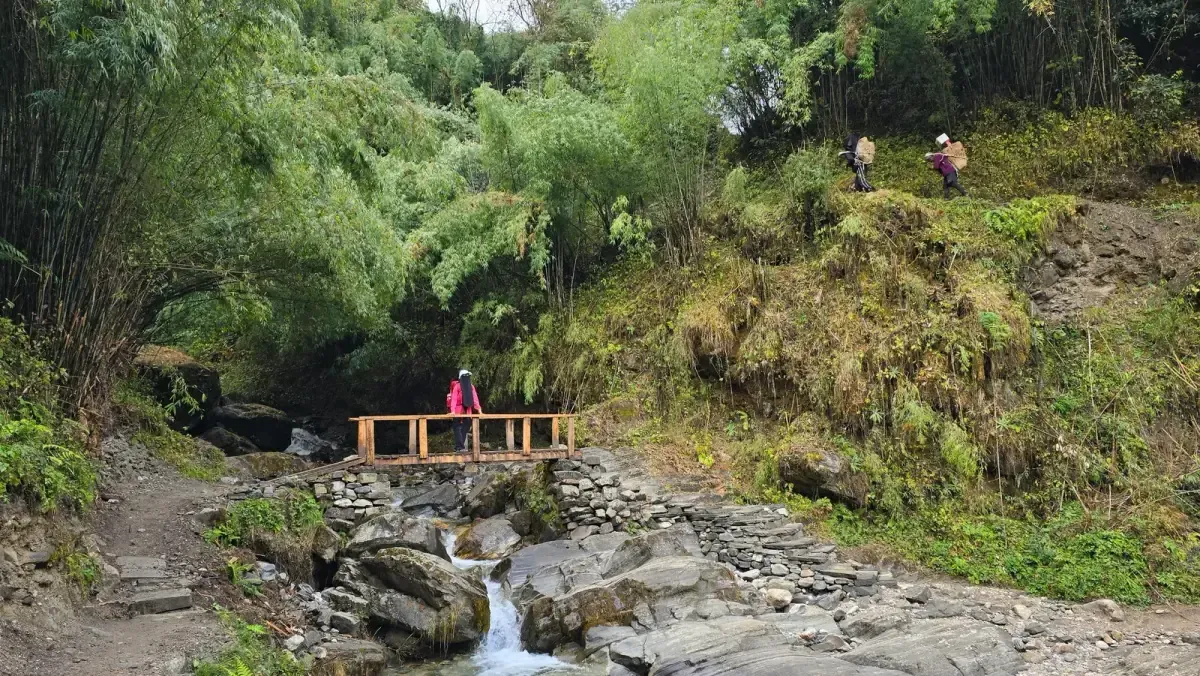
The trail itself is non-technical — no ropes, no scrambling, well-marked and lined with lodges. The walking won’t hurt you. The danger is three specific things, each in a specific place on the route we measured:
So — is it dangerous?
Not the terrain. Every risk above is managed by pace, season and preparation, not by climbing skill — read those three zones and you’ve read the whole risk picture.
Is it safe for beginners?
Yes — for a prepared first-timer. It’s non-technical, so skill isn’t the barrier. The two things that break people — the mental low up high, and the cramping descent (both above) — track preparation, not fitness: what matters is the altitude you’ve already handled and whether you’ve trained the way down. Kak Yaa’s five questions are a better self-check than any “moderate fitness” line, and the training that actually protects you is descent-specific.
How many stairs? The stone steps
The number people mean is the stone-step climb back to Chhomrong on the final day — not a step count, but the vertical your legs actually pay:
51% of Kinabalu's Timpohon → Laban Rata climb — but on the most tired legs of the trip, at up to 32% grade. That's why it's where most people cramp. Measured, Day 6.
Is it crowded? Can I trek it solo?
Busiest in Oct–Nov and Mar–Apr; the monsoon (Jun–Sep) empties the trail. A crowd is a safety margin — you're rarely alone and help is close. Sourced seasonal pattern, not a measured count.
Plenty trek it solo, including solo women — though the 2023 guide rule is contested, so verify the current line on arrival, and in the quiet winter months don’t count on the crowd.
What we learned over the six days
Recorded on the Ohana route, 19–24 October 2025 — every distance, climb and heart rate off a GPS watch, at a steepest sustained pitch of 33.8%. Here’s how the six days actually fell:
6 days · Siwai to Siwai
The six days, measured
| Day | Route | descent m climb |
|---|---|---|
| Day 1 | Siwai Chhomrongsleep 2,221 mhighest HR | |
| Day 2 | Chhomrong Bamboosleep 2,300 m | |
| Day 3 | Bamboo Deuralisleep 3,152 mbreaks people | |
| Day 4 | Deurali Annapurna Base Campsleep 4,131 mhigh point | |
| Day 5 | Annapurna Base Camp Bamboosleep 2,301 msets up the damage | |
| Day 6 | Bamboo Siwai1,653 m80–90% cramp | |
| Total | round trip · measured |
† Heart rate is one hiker's (Kani, who recorded the track), October 2025 — individual, so yours will differ.
- Day 1 has the highest heart rate of the trek — 137 avg, against 127 on the base-camp climb (day 4). A 2.65 km walk at 1.2 km/h, and the hardest single stretch by cardiovascular load.
- Day 6 climbs 719 m on the way out — the last day, on the most tired legs, and almost nobody plans for it.
- Day 5 is the longest day on your feet — 7.2 h moving, longer than the base-camp day. Every itinerary calls it the easy one.
- Every day, your pace is 1.2–2.5 km/h, not 4 — first-timers plan for their flat-ground speed, then panic when a day runs twice as long as the schedule promised.
Breaking Point 1
The climb to Deurali breaks you mentally first
At Deurali and Machhapuchhre Base Camp, it’s the cold and altitude — not legs or lungs. The ones who get through are the well-prepared, not necessarily the fittest.
Compare Kak Yaa’s testimony with what the data says:

Before people break down, here are the signs
- They move slower
— the walking pace drops. - The face shows it first
— the emotion goes. - They stop eating
— appetite disappears. - Then they go quiet
— less talking, short answers, irritable.
Common signs someone is about to break at Deurali.
The final climb into Deurali — 400 m of trail rising 122 m, a ~30% grade at ~3,000 m — ran at an average heart rate of 154: the hardest sustained effort on the route, harder than base-camp morning.
So people hit the wall off the trek’s biggest cardiovascular load — at altitude, ending a seven-hour day, in the cold.
The Summit Effect
The effect of summiting and what actually happens?
Ask Kak Yaa what changes at base camp, and it’s all in the mind:
The summit lifts morale — it lifts a huge burden. People are happier, relieved, free of the weight of summiting.
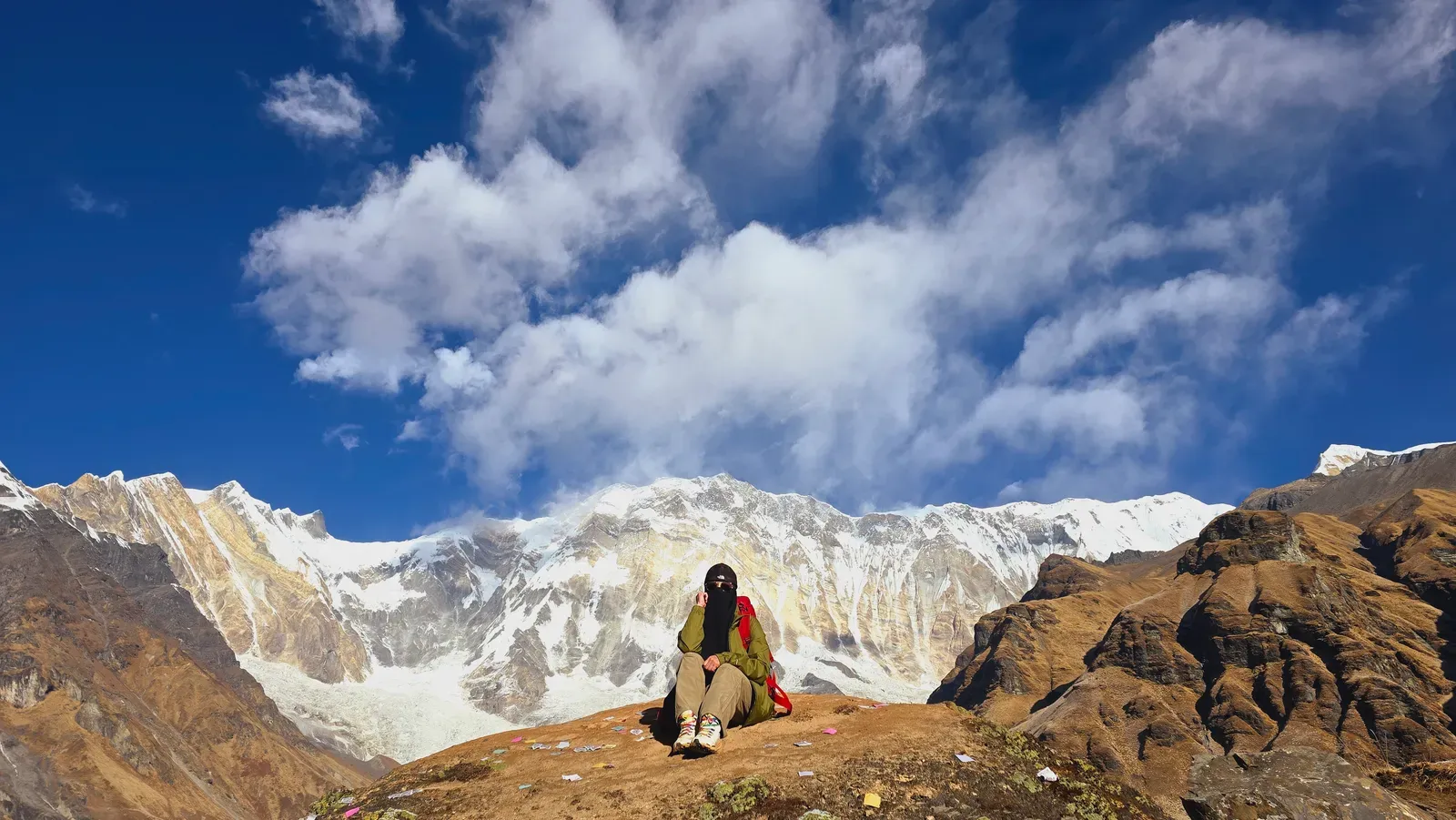
She’s watched it many times. But do they move better — stronger, steadier? No. The change is mental; the legs are exactly as tired as an hour before.
That gap is the whole thing: your mind recovers at 4,131 m, your body doesn’t — and you then walk downhill for two days on your mind’s recovery.
Morale (Kak Yaa’s read, not a measurement) peaks at base camp on day 4; the body’s hardest work lands after it. The two biggest descent days run some of the lowest heart rates of the trek — the toll of going down is muscular, not cardiovascular, and your watch barely registers it.
Breaking Point 2
The walk home breaks your knees
Coming down, morale is up. People stop managing their step length — it’s downhill, the view is extraordinary, some even run. No rest pattern, because nobody feels they need one.
That day is 15.24 km and 2,086 m of descent, 7.2 hours moving, with a −33% stretch in it. It’s the deepest single day on either trek we’ve walked — the same pattern holds on Everest, whose hardest measured day is also a descent. See both scored side by side in which is harder: ABC vs EBC.
The bill arrives the next day. The walk out drops to the river (1,840 m), climbs 352 m of stone steps back to Chhomrong — a sustained 32%, one to two hours — then gives back 569 m to Jhinu Danda.
80–90% of the people I walk with cramp on that stretch
- Calves, quads, adductors. Ankle injuries are prominent.
- Morale breaks a second time, on the stairs.
- The Chhomrong to Jhinu Danda descent causes many injuries too.
- It is not the same people who struggled going up.
- The people who ran the descent don’t necessarily suffer here. You cannot predict who it will be.
Pain and cramping that show up a day late and don’t track descent speed fit delayed muscle damage from eccentric loading — why downhill is harder on muscle than uphill. General physiology, not her claim.
Can a beginner do it? Kak Yaa’s five questions
Many do. Kak Yaa asks first-timers the same questions, in order — a better self-check than any “moderate fitness required” line:
- What altitude have you already stood on top of?
- What’s your hiking level?
- Any health complications — asthma, previous surgery?
- What equipment do you already own?
- Here’s the list of what you still need.
Note the first question isn’t fitness — it’s what your body has already done at height.
- Be mentally prepared — she lists this ahead of any physical advice. Given the first breakdown is mental, that order is no accident.
- Understand the journey, not just the trek — the roads, the facilities, two full days of travel each way.
- Be ready to walk long hours.
- Bring extra food — trail food won’t be what you eat at home, and by day five that matters more than you’d think.
- Train hard.
Now train for it — the descent, not the climb
That’s the diagnosis: what you’re up against, and where it breaks people. The fix is descent-specific, and it’s a page of its own — the full training prescription, an on-trail cramp protocol, and a two-minute readiness self-check.
How to train for Annapurna Base Camp
Cardio gets you up; it does nothing for the way down, where the injuries are. How to train for the descent — Kak Yaa’s prescription, the cramp protocol, and the readiness check, plus the Trek-Ready Program built for exactly this gap.
Is this even the ABC trek you’ve read about?
This may not be the trek you've read about
This route starts at the Siwai roadhead (1,643 m) — no Nayapul, Ulleri staircase, Ghorepani or Poon Hill. Six days, 54.72 km round trip. The classic Nayapul route is roughly double the distance. So when you read “is ABC hard?”, check which trail the writer walked — see our day-by-day itinerary.
Your nights may not match the printed itinerary
Two of our five overnights differed from the plan — that’s normal; guides pick teahouses by season. Treat any printed itinerary as indicative.
How we know this
Every number on this page traces to one of three things — and we mark which:
- RecordedMeasured
- by Kani (Ohana trip leader) on a COROS watch — 57,960 points at one-second sampling, barometric elevation and heart rate, 19–24 October 2025. Full day-by-day and the complete data table in the ABC itinerary.
- TestimonyFirst-hand
- Kak Yaa, experienced hiker, interviewed 26 July 2026. Her claims are attributed to her throughout. Where our reading of the evidence differs from hers, we say so — twice on this page.
- InferenceOur reasoning
- One, on eccentric loading — labelled as ours, not hers, where it appears.
Checked 27 July 2026. Prices and route conditions change. If you spot something wrong, tell us and we'll correct it with a dated note.
Disclosure: some gear links on this site are affiliate links and we may earn a commission at no extra cost to you. Our source on this route is an experienced hiker who is listed as a contact for Ohana Travel & Tours. We name her, and we publish where our reading of the evidence differs from hers.
How hard is it, really?
Our score is measured from the route numbers. Add yours if you’ve walked Annapurna Base Camp.
Frequently asked
How difficult is the Annapurna Base Camp trek?
What is the difficulty level of the Annapurna Base Camp trek?
How long is the Annapurna Base Camp trek?
How high is Annapurna Base Camp?
Is Annapurna Base Camp dangerous?
Is Annapurna Base Camp harder than Everest Base Camp?
Can a beginner do the Annapurna Base Camp trek?
How many days do you need for Annapurna Base Camp?
What is the elevation gain on the Annapurna Base Camp trek?
Is the Annapurna Base Camp trek safe?
How many stairs are on the Annapurna Base Camp trek?
Is the Annapurna Base Camp trek safe for solo female trekkers?
Is the Annapurna Base Camp trek crowded?
Discussion
Loading discussion…