Trek
Annapurna Base Camp Trek: The Measured Guide
The full guide
6 parts · 42 min read
- What actually happens each day?Itinerary: A Measured 6-Day Day-by-DaySix walking days to Base Camp and back — measured distances, climbs, and the day each one actually breaks people.
- Am I fit enough for this?Difficulty: most people get hurt on the way homeWe put a watch on the trek — six days, heart rate throughout. The hard part isn't the climb: 80–90% of trekkers get hurt on the way home.
- How do I train for it?Train the part that actually ends tripsAlmost everyone trains the climb. We measured the trek — the injuries are on the way down. Here's how to train the descent, and the system built for exactly that gap.
- When should I go?The 2026 season, month by monthOctober–November and March–April are the two windows. Here's the month-by-month, the winter avalanche catch, and the monsoon trap — plus one first-hand note: our measured trek was walked in late October.
- What will this actually cost?A real 2026 budget breakdown, in USD and RMDaily budget, the ACAP permit, transfers, guide/porter and realistic totals — sourced 2026 ranges in USD and RM, shorter and cheaper than the Circuit.
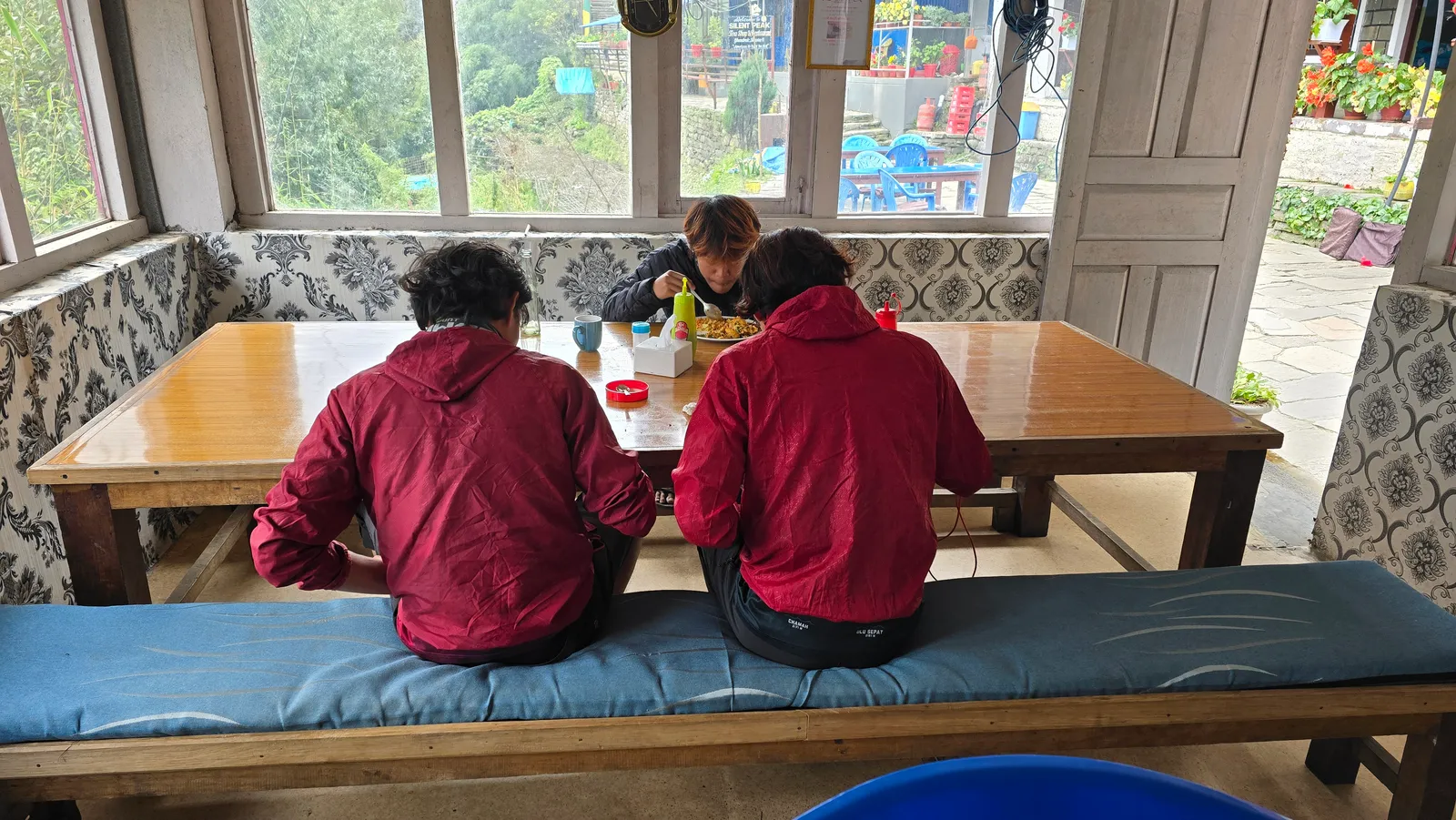
- Can I do it without a guide?Do You Need a Guide? (2026, Honest)Two questions hide in this one — is a guide required, and would one actually help you? An honest answer to both.
Trek highlights
Every line below is either measured off the GPS file, or attributed to the person who said it.
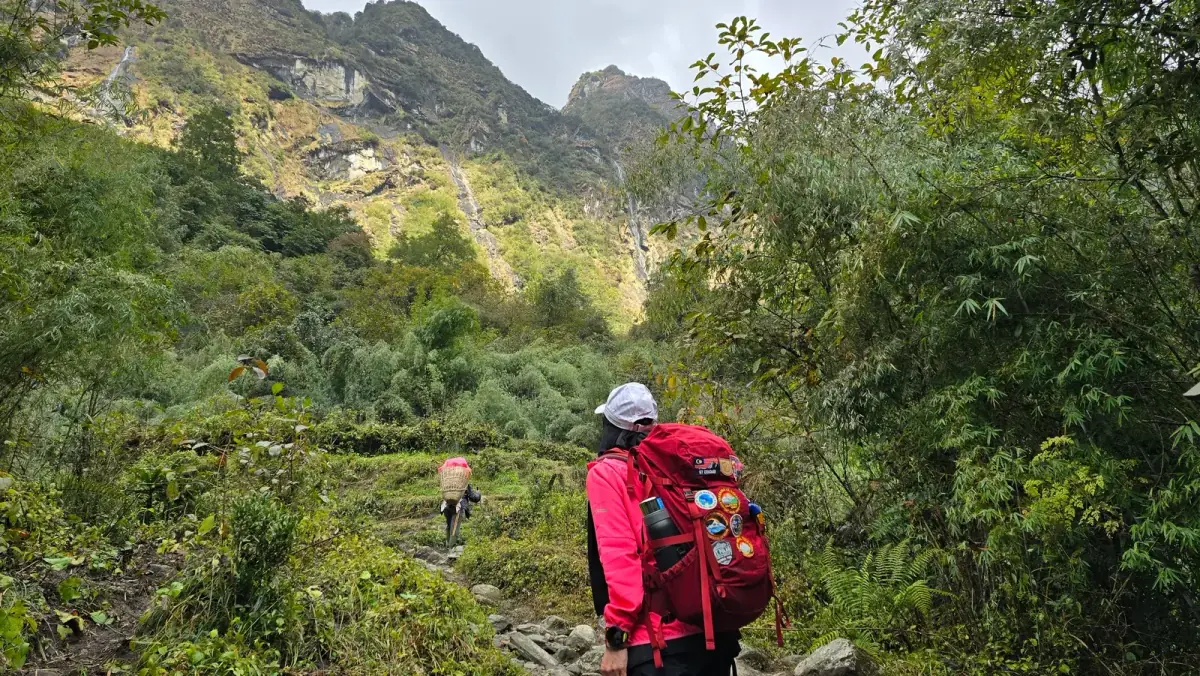
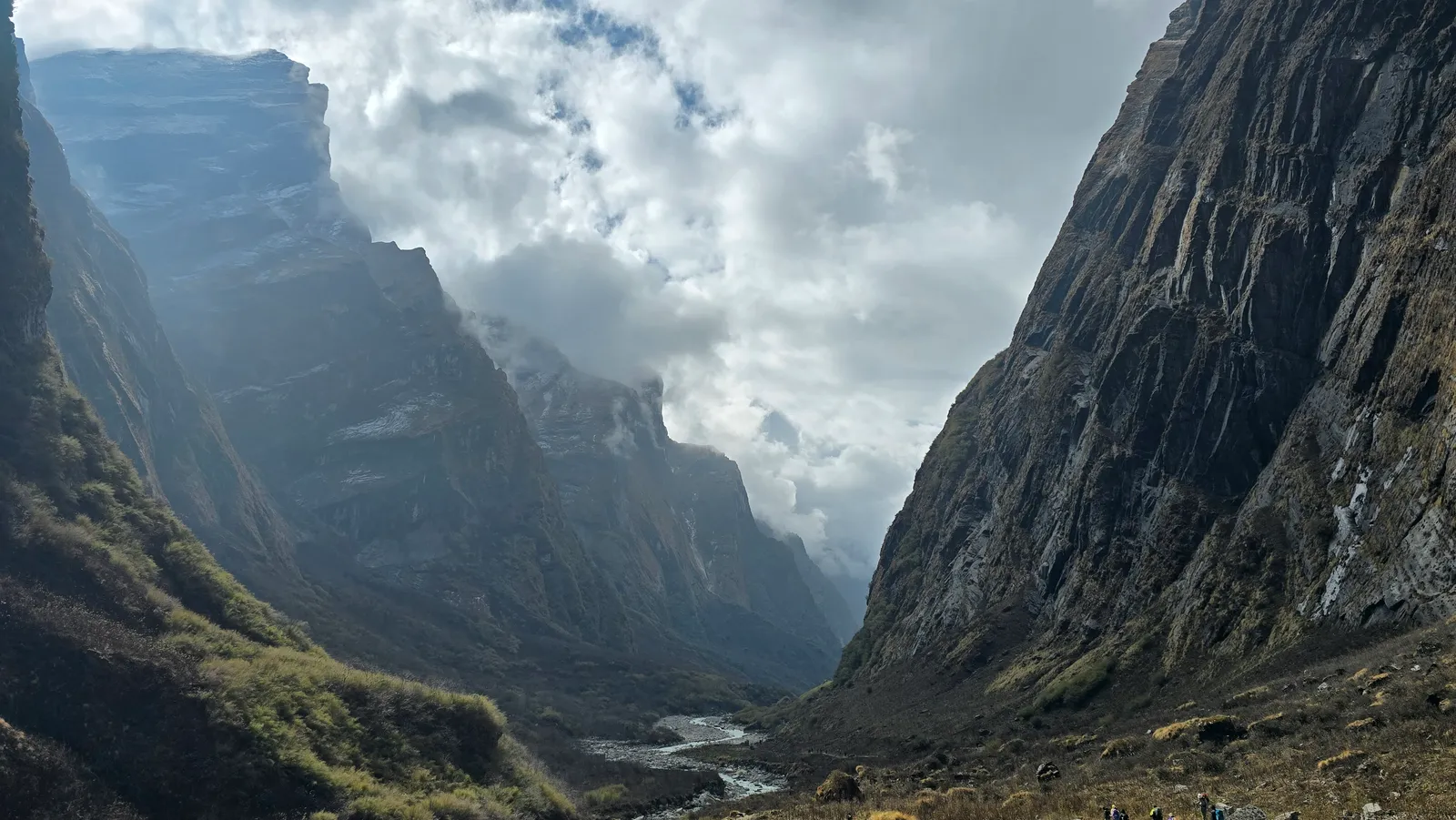
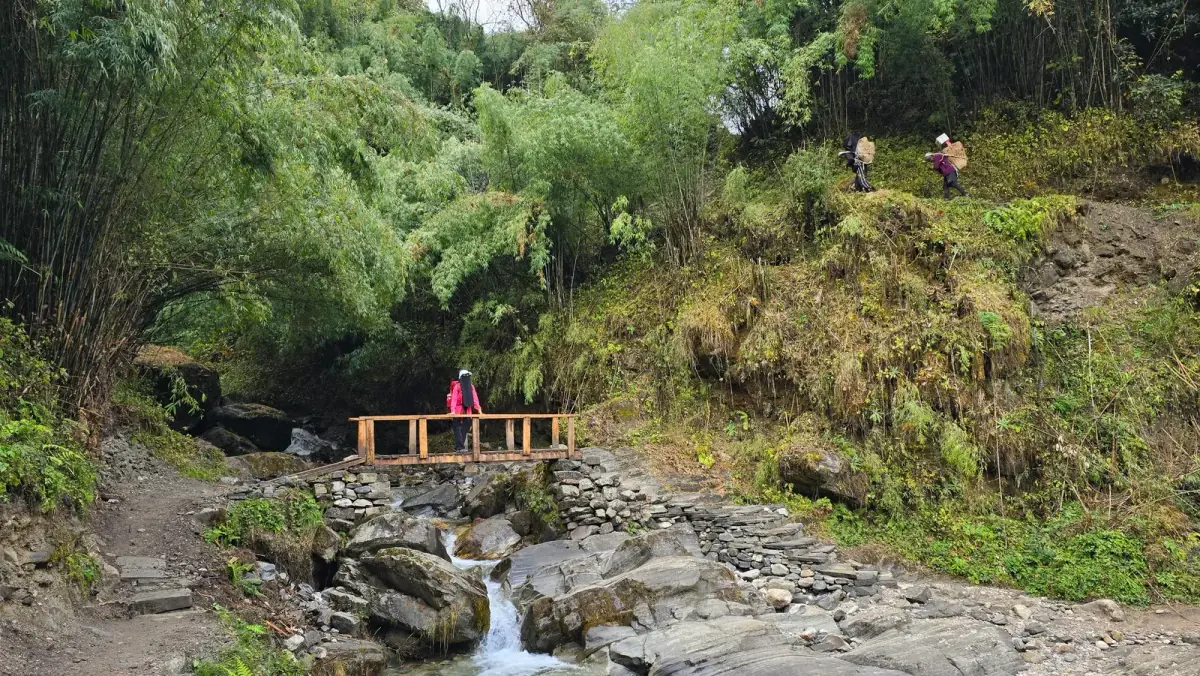
Walk in from the Siwai roadhead, up through river gorge and rhododendron forest.
COROS · day 1 · 2.65 km, +608 m
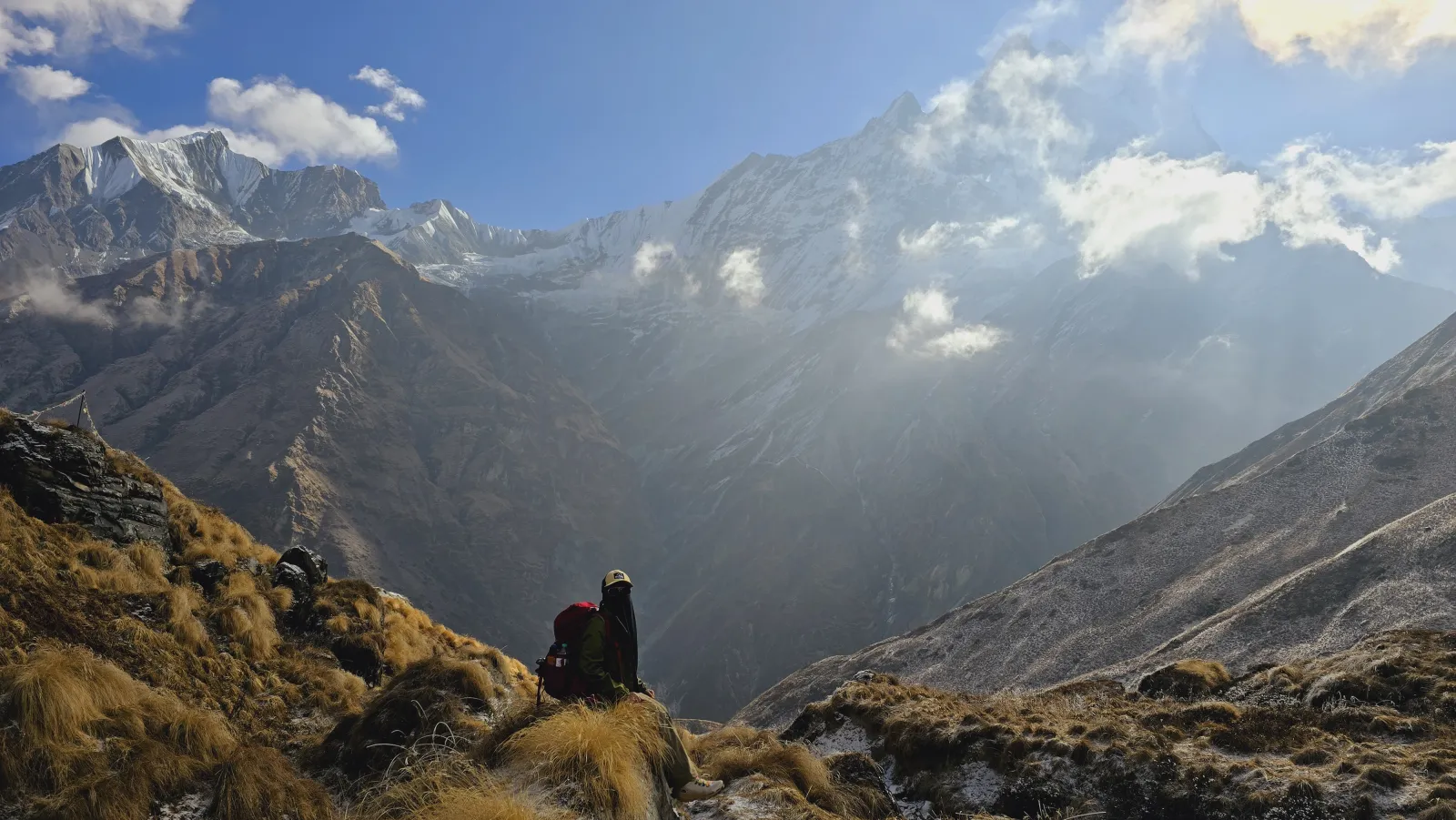
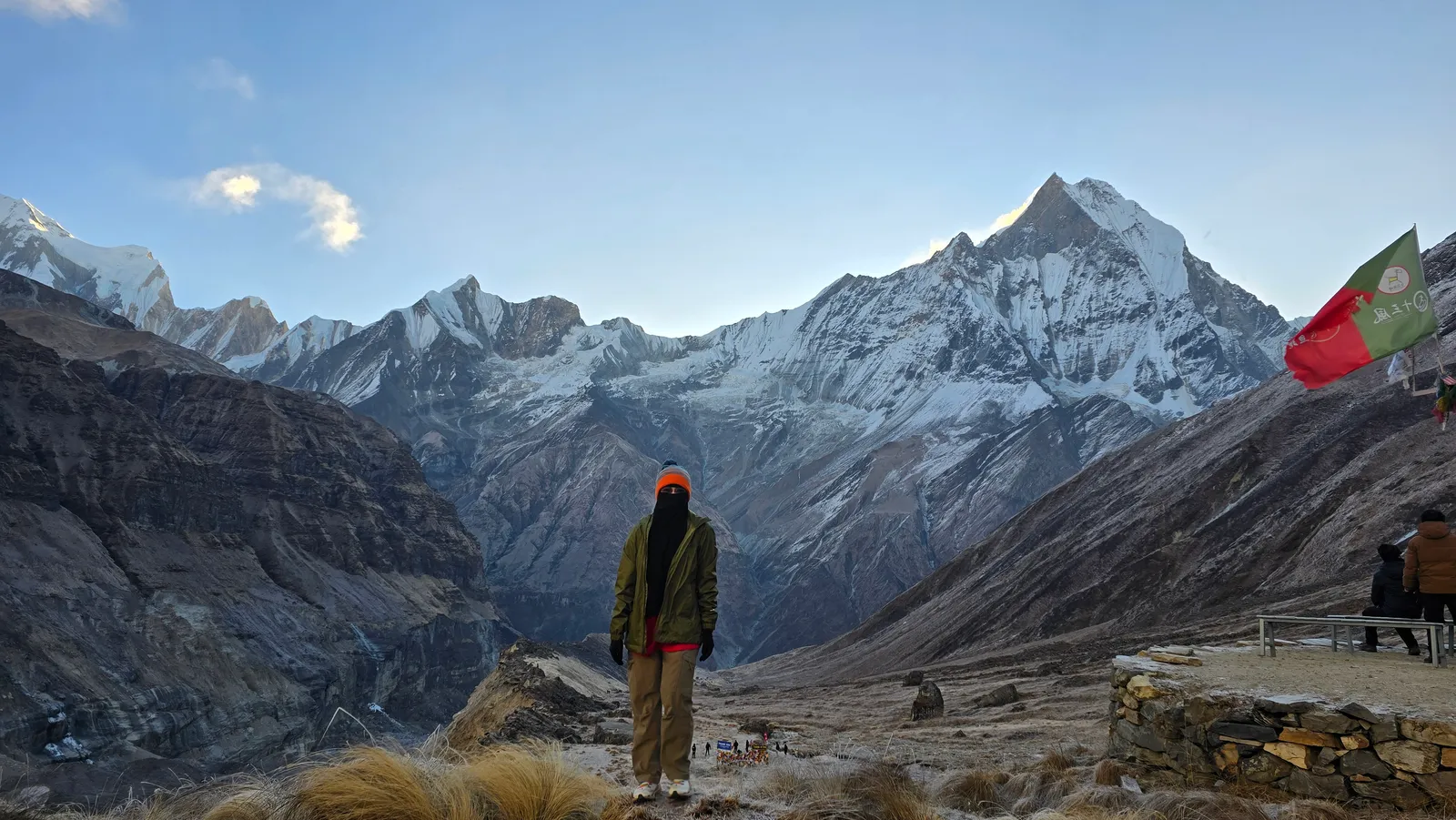
Pass Machhapuchhre Base Camp, directly beneath the Fishtail, on the climb to ABC.
COROS · day 4 · passed en route to ABC
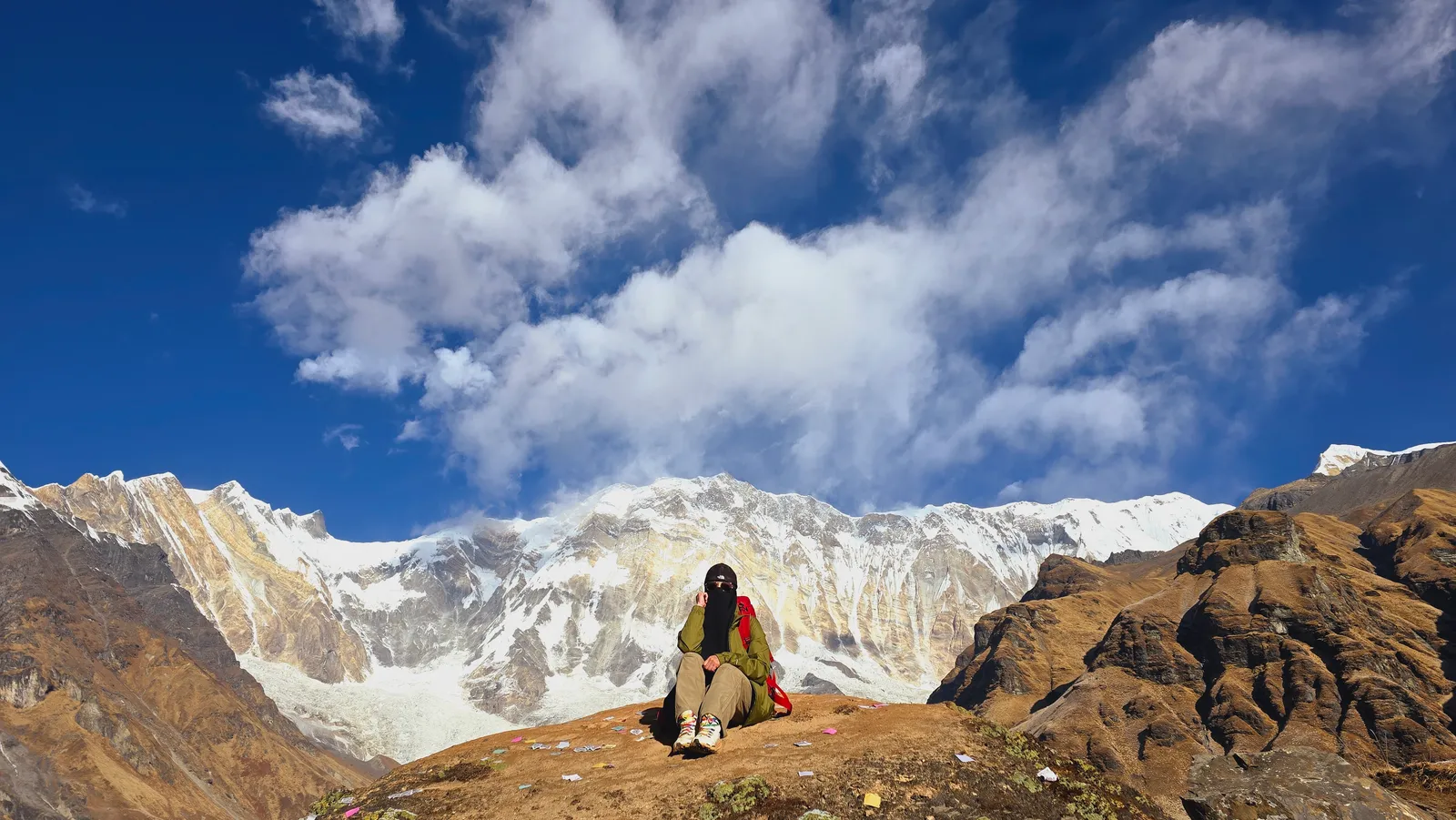
Stand in the sanctuary at 4,131 m, ringed by Annapurna I, Hiunchuli and Annapurna South.
COROS · sleep altitude, barometric
The hardest effort isn't the summit — it's the climb into Deurali, at an average heart rate of 154.
COROS · day 3 · one walker, yours will differ
The bill lands on the walk out: 80–90% of trekkers cramp on the Chhomrong stone steps.
Kak Yaa, experienced hiker
Sleep in simple, unheated tea houses — cold at altitude, even in October — and share the evenings with fellow trekkers.
Kak Yaa, experienced hiker
Frequently asked
How long is the Annapurna Base Camp trek?
How many kilometres a day do you walk on the Annapurna Base Camp trek?
How difficult is the Annapurna Base Camp trek?
How high is Annapurna Base Camp?
Can you get altitude sickness on the Annapurna Base Camp trek?
Is the Annapurna Base Camp trek suitable for beginners?
How much does the Annapurna Base Camp trek cost?
Do you need a guide or a permit for Annapurna Base Camp?
When is the best time to trek to Annapurna Base Camp?
Is Annapurna Base Camp harder than Everest Base Camp?
Is the Annapurna Base Camp trek worth it?
The walks behind these numbers
Every number on this page traces to a named person who walked the route. Measured trips are backed by the device file; testimony is first-hand and attributed.
- RecordedMeasured
- Kani, Ohana trip leader · 19–24 October 2025 · COROS GPS watch · GPS track · Barometric elevation · Heart rate. 57,960 points at one-second sampling
- TestimonyFirst-hand
- Kak Yaa, Experienced hiker · supports groups remotely. Has walked Annapurna Base Camp herself; observations attributed throughout, interviewed July 2026. Not on the trip we recorded.

Keep planning
- Cold-weather training — What actually builds cold tolerance for a trek - and what's hype (and dangerous).
- Cold-weather layering — The clothing system, layer by layer — what each does, when to wear it, and the one habit (don't sweat) that keeps it working.
- Trek packing & gear — Not a generic list — what to bring and why, driven by what we actually measured: the descent that hurts people, the nights above 4,000 m, and the wet forest below.
- Trek preparation — Altitude is the genuine danger up high. The golden rules, the warning signs, and the one rule that saves lives — descend.
- Annapurna Circuit — The ACAP cost, the TIMS confusion, and the contested guide rule — official line vs on-the-ground reality, sourced and dated.
- Mardi Himal — The short, accessible Annapurna-region trek — a sourced route, honestly flagged.
- Everest Base Camp — Ten days up the Khumbu valley to the foot of Everest — high, cold and remote.