Trek
Everest Base Camp Trek: The Measured Guide
The full guide
6 parts · 40 min read
- What actually happens each day?Itinerary: A Measured 10-Day Day-by-DayTen walking days to Base Camp and back — measured distances, climbs, hours, and the day each one actually costs you the most.
- How hard is it, really?Difficulty, measured — it's the altitude and the long days, not the terrainHow hard is it, really — measured. Not the climb: it's the altitude, the long days, and the descents that send most people home sore.
- How do I train for it?Train the descents and the long days — the altitude you can'tMost people train the climb. We measured the trek — the hardest days are descents, the days run 9 to 13 hours, and the altitude isn't a gym problem. Here's what to actually train.
- When should I go?The 2026 season, month by monthAutumn (late Sep–Nov) and spring (Mar–May) are the two windows. Here's the month-by-month, the Lukla-flight catch that no season removes, and one first-hand note: our measured trek was walked in early November.
- What will this actually cost?A real 2026 budget breakdown, in USD and RMDaily budget, the Lukla flight, the Khumbu permits, guide/porter and realistic totals — sourced 2026 ranges in USD and RM, and why it costs more than Annapurna Base Camp.
- What permits do I need?The 2026 rules, the two Khumbu permits, and the guide questionTwo permits and no TIMS card — and, unlike Annapurna, you can still legally trek it independently. The rules, sourced and dated 2026.
Trek highlights
Every line below is either measured off the GPS file, or attributed to the person who said it.
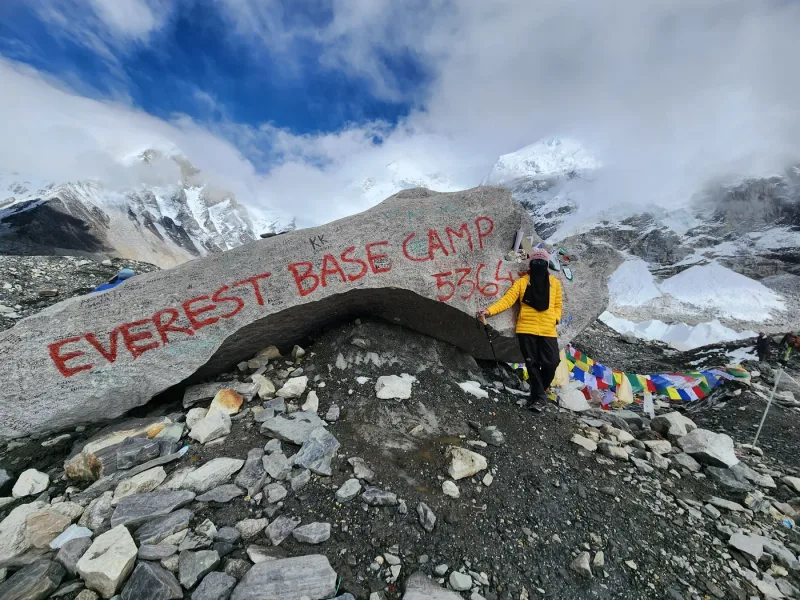
The base-camp day ran 11h26 door to door for 6h39 of actual walking. Every itinerary quotes the walking number — nobody prints the 11 hours.
Garmin · day 7 · Nashriq
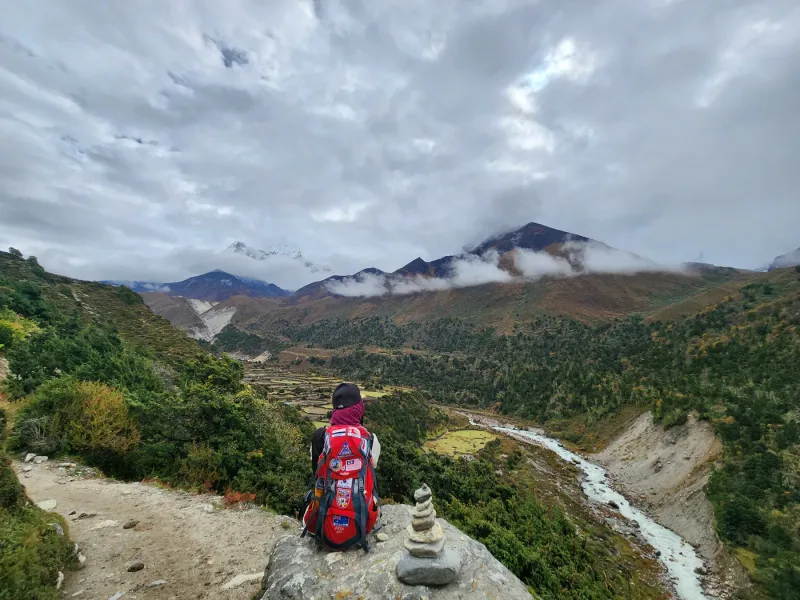
The biggest day of the trek is a descent: 23.1 km and 1,429 m down — longer than any climb, including the Base Camp day.
Garmin · day 9 · Nashriq
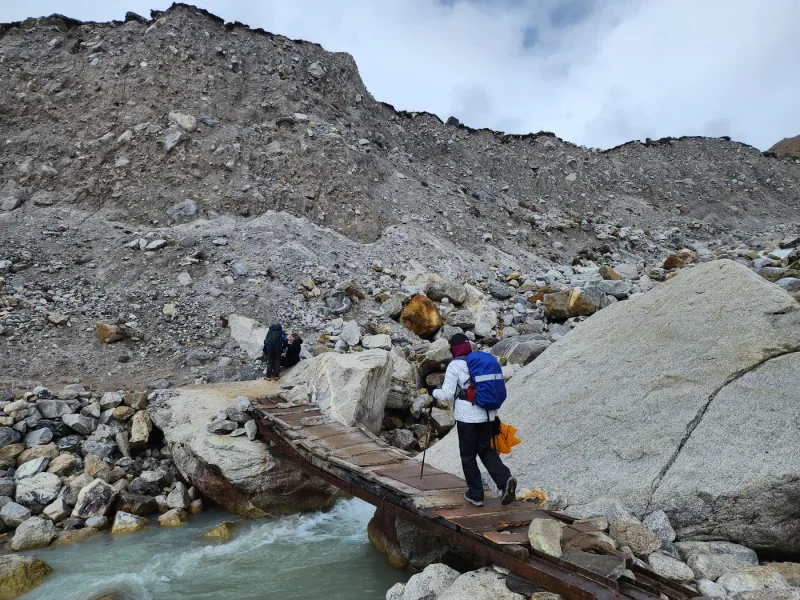
14.5 hours above 5,000 m across the trek — 10.2 of them on the Base Camp day alone.
Garmin · measured
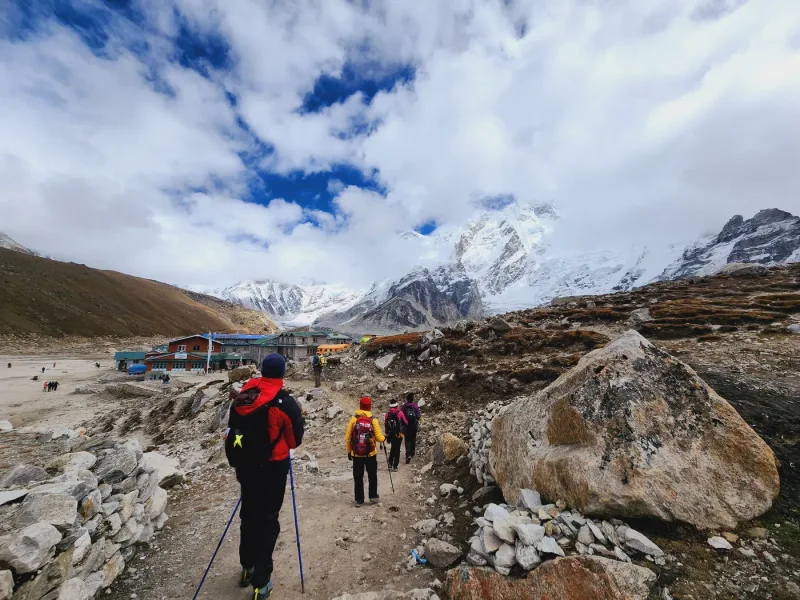
6,966 stops, median 9 seconds — a guided group moves at the pace of its slowest member. You wait; you don't rest.
Garmin · measured
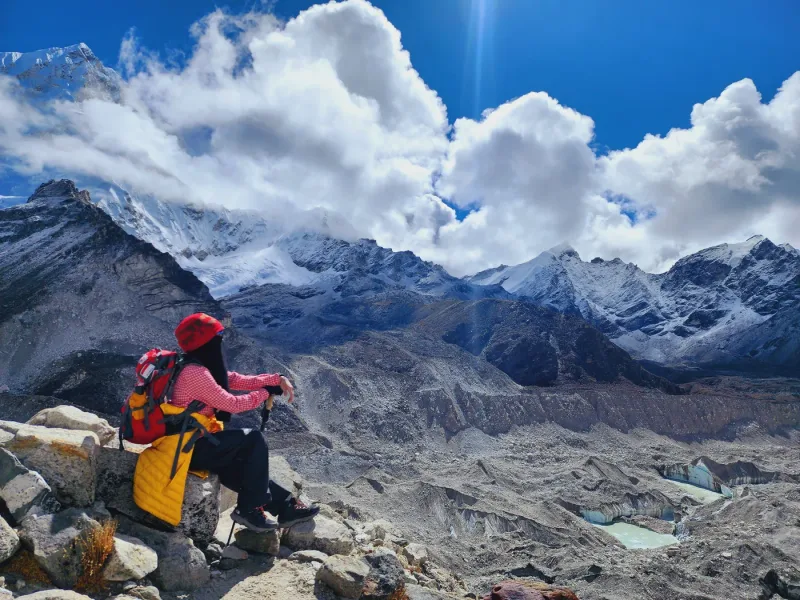
A sunrise on Kala Patthar needs a 3am roll call — the wake-up no itinerary prints. The measured track bears it out exactly.
Kak Yaa, experienced hiker · borne out by the track
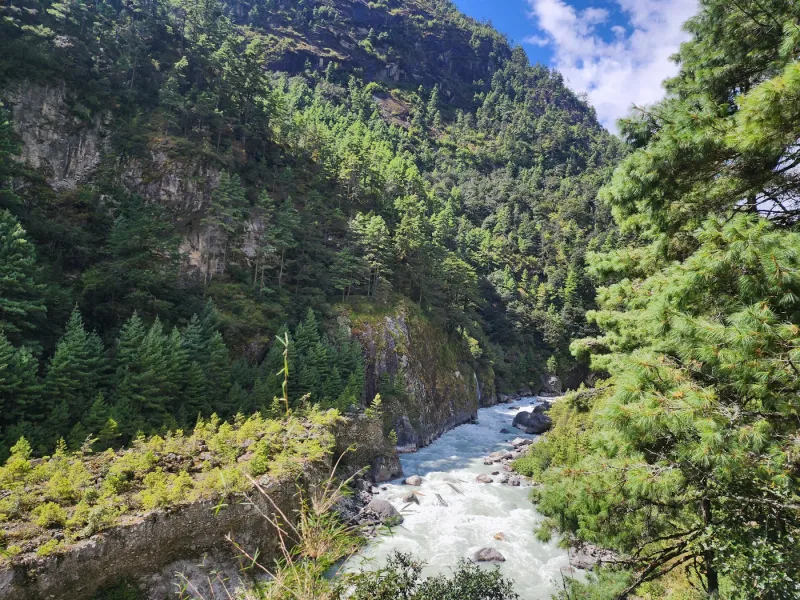
Day one is the easiest on record — lowest average heart rate of the trek, under 3 hours moving, a net descent after the morning flight.
Garmin · day 1 · Nashriq
Frequently asked
How long is the Everest Base Camp trek?
How high is Everest Base Camp?
How difficult is the Everest Base Camp trek?
Can you get altitude sickness on the Everest Base Camp trek?
How many days do you spend above 5,000 metres on EBC?
Do you need a guide for the Everest Base Camp trek?
When is the best time to trek to Everest Base Camp?
How do you get to the start of the Everest Base Camp trek?
Is the Everest Base Camp trek worth it?
Is the Everest Base Camp trek crowded?
What do you need to pack for the Everest Base Camp trek?
The walks behind these numbers
Every number on this page traces to a named person who walked the route. Measured trips are backed by the device file; testimony is first-hand and attributed.
- RecordedMeasured
- Nashriq, Recorded the EBC track · 2–11 November 2025 · Garmin watch · GPS track · Elevation · Heart rate · Cadence. 62,107 points across 11 stage files · the fitter tail of the group, not the average
- TestimonyFirst-hand
- Kak Yaa, Experienced hiker · supports groups remotely. Has walked Everest Base Camp herself; her account of the route is being transcribed onto the day pages. Not on the trip we recorded.

Keep planning
- Cold-weather training — What actually builds cold tolerance for a trek - and what's hype (and dangerous).
- Cold-weather layering — The clothing system, layer by layer — what each does, when to wear it, and the one habit (don't sweat) that keeps it working.
- Trek packing & gear — Not a generic list — what to bring and why, driven by what we actually measured: the descent that hurts people, the nights above 4,000 m, and the wet forest below.
- Trek preparation — Altitude is the genuine danger up high. The golden rules, the warning signs, and the one rule that saves lives — descend.
- Annapurna Circuit — The ACAP cost, the TIMS confusion, and the contested guide rule — official line vs on-the-ground reality, sourced and dated.
- Annapurna Base Camp — A short, steep climb into the glacial sanctuary ringed by Annapurna's peaks.
- Mardi Himal — The short, accessible Annapurna-region trek — a sourced route, honestly flagged.