How to Train for the Everest Base Camp Trek
Train the descents and the long days — the altitude you can't
Most people train the wrong half of Everest Base Camp. You’ll train the climb — the cardio, the hills, the step machine going up. Then we put a watch on the route, and the trek’s hardest days were on the way down: the three biggest days were all after the high point, including a 23.1 km, 1,429 m drop to Namche. Lung fitness gets you up. It does nothing for the descents, the ten-day accumulation, or the altitude — and those are what actually catch people. Here’s the measured evidence for where EBC is hard
It isn't the climb. It's the descents, the long days, and a height you can't train away.
Everest Base Camp is non-technical — no ropes, no ice, no skill. What makes it hard is measured, and none of it is solved by cardio alone: descent-strong legs, endurance for long consecutive days, and the plain fact that altitude is managed on the trail, not in the gym.
Train the three things the trek actually asks for
Every number below traces to the measured trek — one fit walker, one Garmin, ten days — read together with well-sourced training principle.
1. Descent-strong legs — the part nobody trains
The single clearest finding on both treks we’ve measured is that the descents do the damage. On EBC the three biggest days all came after Base Camp, and downhill at altitude costs more than downhill low down — the same walker’s heart ran a median 134 bpm dropping from Gorakshep at 5,100 m, against 106 bpm on the final descent to Lukla: +28 bpm for the same easy effort, and that’s the fittest walker in the group.
+28 bpm harder descending high than low.
same easy downhill effort — 134 bpm at 5,100 m vs 106 at 2,800 m, and that's the fittest walker in the group.
- Eccentric (downhill) leg strength — step-downs, slow controlled descents, loaded downhill walking. This is the most protective work you can do, and the work most plans skip.
- Train with load — 8 to 11 kg on your back, not an empty daypack, weighted toward the down.
- Poles are mandatory — and train with them. Set them longer for descending; practise until it’s automatic. Buy rather than hire so you train with the pair you’ll walk with.
- Knee history? Brace it and do knee-specific work well before you fly.
2. Endurance for long, consecutive days
The climbing days on EBC aren’t steep — they’re long. Door-to-door elapsed time ran about 1.6× the walking hours once you add breaks, tea stops and the slow high-altitude pace, so a six-hour walk is a nine-to-ten-hour day out. The Base Camp day itself was 11.4 hours on the clock; the Kala Patthar day ran 13. And you do it ten days running, not once.
- Back-to-back long days beat one hard session — train the recovery between days, because that’s what the trail demands.
- Time on feet, not speed. Build an aerobic base that carries a loaded pack for hours, day after day.
- Practise your real pace. Up high you can’t walk at your normal speed; training slow-and-steady with load is closer to the day than a fast flat run.
3. The altitude — managed on the trail, not in the gym
Here’s the honest limit of training. On the measured trek you spend roughly 14 hours above 5,000 m, sleep as high as 5,160 m, and pass four nights above 4,000 m. No amount of gym work makes you immune to that.
Are you ready? A two-minute self-check
Raw cardio isn’t the question — prior altitude exposure and descent strength are. This finds your gaps:
Self-assessment
Are you ready for Everest Base Camp?
Five quick questions, built from what actually breaks people on this trail. A self-check — not medical advice or a guarantee.
The same lesson, twice measured
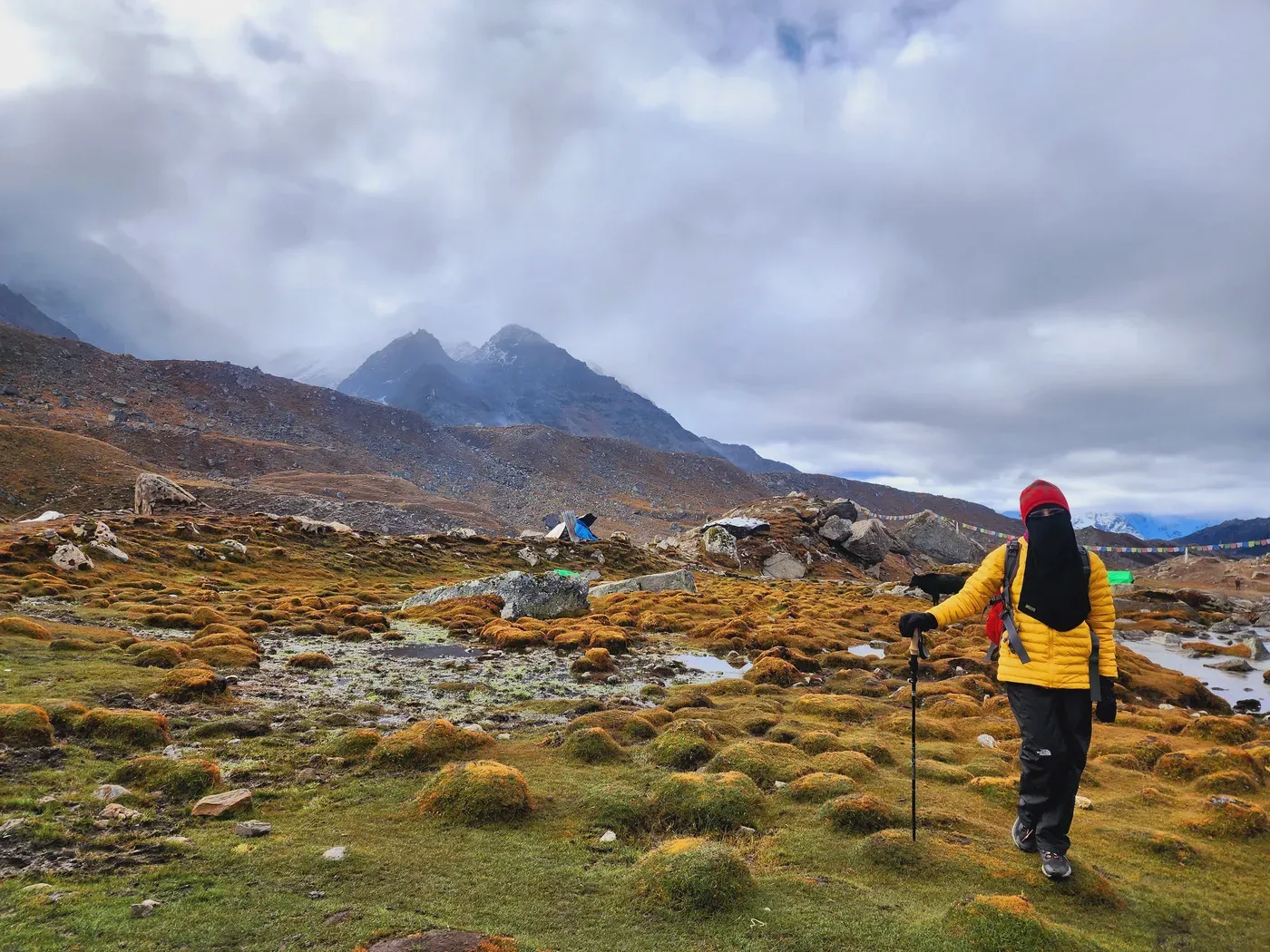
We’ve now put a watch on two different treks, two different walkers, two different mountains — and the training verdict is the same on both: train the descent, not just the climb. On Annapurna Base Camp it was the stone steps home where most trekkers cramp; on Everest it’s the three big descending days after the high point. Every itinerary sells the ascent; the bill arrives on the way down. Train your knees and quads, not just your lungs.
The whole thing, systematised
Everything above is the knowledge. The hard part is turning it into twelve weeks of the right work, in the right order, from wherever your body is now — the descent conditioning, the day-after-day endurance, the cold habituation for freezing high teahouse nights, and the honest altitude readiness that a gym can’t give you. That’s the Trek-Ready Program.
Related: Where EBC is hard — difficulty, measured · The measured 10-day itinerary · Altitude & acclimatisation · Cold-training guide · How to train for Annapurna Base Camp · The Trek-Ready Program
Frequently asked
How do I train for the Everest Base Camp trek?
How fit do you need to be for Everest Base Camp?
Should I train for the climb or the descent on Everest Base Camp?
Can you train for the altitude on Everest Base Camp?
Do you need trekking poles for Everest Base Camp?
How long should you train for Everest Base Camp?
Discussion
Loading discussion…